
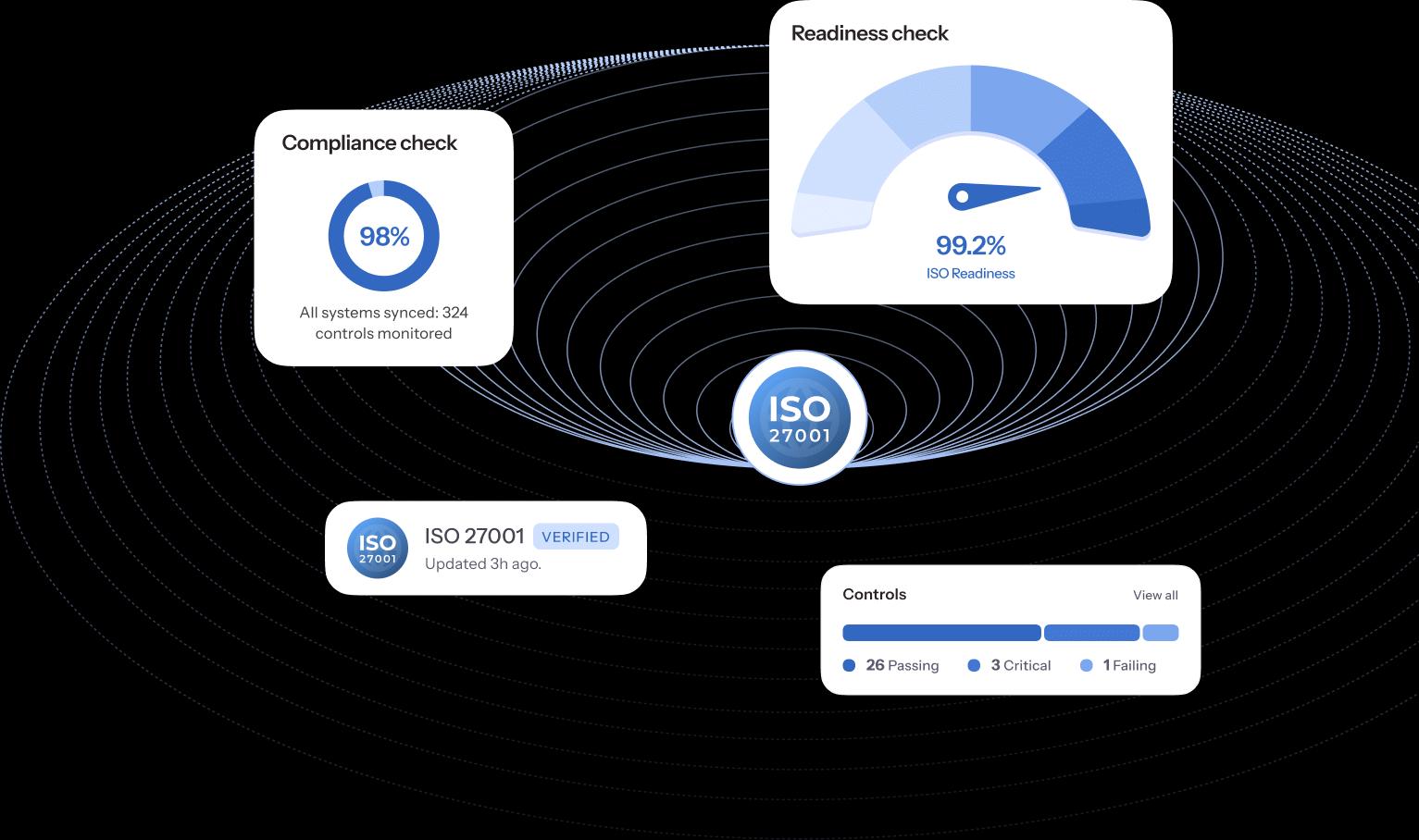
Fast audit readiness depends less on policy volume and more on control clarity. Auditors look for controls that are implemented, monitored, and supported by reliable evidence. A fifty-page policy that nobody follows is worth less than a ten-line procedure with automated proof of execution.
Before you start the thirty-day sprint, confirm scope. Which cloud accounts, services, and teams are in scope? Which framework are you assessing against—ISO 27001, SOC 2 Type II, PCI DSS, or a customer-specific questionnaire? Ambiguous scope is the single biggest time sink in audit preparation.
In week one, inventory in-scope systems and map each required control to a technical implementation owner. Remove ambiguity before you start collecting artifacts. Build a control matrix with three columns: control requirement, technical implementation, and evidence source. If any cell is blank, that is your week one priority.
In week two, gather core evidence: access review records, vulnerability management outputs, backup and recovery test results, incident response logs, and change approval trails. Store evidence in a structured repository with dates, owners, and system identifiers. Auditors lose confidence quickly when evidence is scattered across email threads and shared drives.
In week three, run an internal walkthrough as if it were an external audit. Track exceptions, assign remediation owners, and define due dates with clear accountability. Invite someone outside the compliance team to ask questions—fresh eyes surface gaps that insiders overlook.
In week four, finalize the evidence package and leadership review. A concise, traceable control narrative gives auditors confidence and reduces repeat findings. Prepare a one-page executive summary explaining your control environment, known exceptions, and remediation timeline.
Common cloud-specific gaps to check early: encryption at rest and in transit for databases and object storage, MFA on all administrative access, logging retention meeting framework requirements, and documented incident response tested within the last twelve months.
Do not neglect vendor management. Cloud audits increasingly scrutinise subprocessors, shared responsibility documentation, and data processing agreements. Have your vendor list, risk assessments, and contract clauses ready before the auditor asks.
After the audit, convert findings into a living remediation backlog. The thirty-day sprint is not a one-off exercise—it is the foundation for continuous assurance. Schedule quarterly evidence refreshes so the next audit is a confirmation, not a fire drill.